15th June 2026
5-Minutes Reading
Why Banks Need a Connected Credit Ecosystem, Not Disconnected Systems
Banks don’t suffer from a lack of credit expertise. They suffer from a lack of connection.
In many institutions, credit decisions are slowed down not by risk complexity, but by fragmentation, where origination sits in one place, risk assessment in another, approvals in a third, and monitoring somewhere else entirely. Even strong credit teams and solid policies can’t perform at their best when systems don’t communicate and workflows don’t flow. The outcome is predictable: delays, duplication, inconsistent decision logic, and limited visibility into where deals stall. A connected credit ecosystem solves this problem by aligning origination, decisioning, risk oversight, and monitoring into one coordinated operating model. It doesn’t remove human judgment, it reduces the operational noise that blocks it.
The hidden cost of silos in credit operations
When commercial lending, retail lending, and risk functions operate in isolation, banks pay in four major ways—often without noticing until performance or governance is under pressure.
First, turnaround times grow. Files bounce between teams with unclear ownership, documents get re-requested, and approvals sit idle because no one can see where the bottleneck actually is. Delays rarely happen at the moment of “decision.” They happen between teams.
Second, decision consistency weakens. When each portfolio or department follows different scoring logic or exception handling, banks end up with uneven outcomes across similar cases. That inconsistency makes governance harder, increases internal friction, and raises questions during reviews and audits.
Third, operational risk increases. Manual steps invite errors. Repeated data entry creates mismatches. Ad-hoc exceptions become routine. Over time, these small breaks turn into a bigger risk exposure—not because the bank lacks controls, but because the process itself isn’t structured end-to-end.
Finally, portfolio visibility suffers. Without a unified view across borrowers, facilities, and workflow stages, leadership can’t detect trends early, measure performance reliably, or intervene before deterioration becomes visible in outcomes.
What a “credit ecosystem” really means in banking
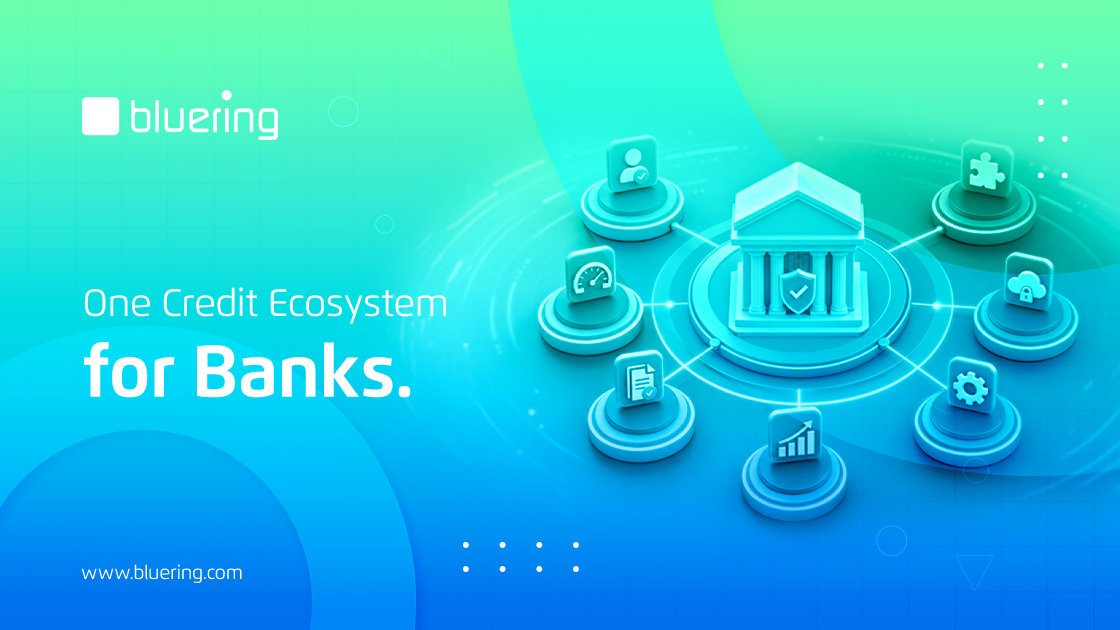
A credit ecosystem is not a buzzword and it’s not a single system. It’s an approach where the credit lifecycle is treated as a connected flow—supported by processes and technology that reinforce consistency, governance, and speed. In a mature ecosystem, origination and intake are structured, so applications start clean and complete. Workflows are orchestrated across teams, so files move with clear ownership and escalation rules rather than informal handoffs. Risk assessment is standardised across portfolios, so decision logic remains consistent. Monitoring and analytics provide early signals and portfolio insights—not only after issues appear. And governance is embedded throughout, ensuring approvals, exceptions, and reporting are traceable and controllable.
What “good” looks like when the ecosystem is connected
When the ecosystem is working, the credit lifecycle feels less like a relay race and more like a coordinated system. Origination captures the right inputs once, instead of repeating requests. Workflows reduce back-and-forth, prevent stalled files, and make ownership clear. Risk logic is applied consistently, reducing variability and strengthening governance. Monitoring becomes proactive, because risk teams can see shifts in trends early. And reporting becomes a natural output of the process, not a manual task at the end of the month. The biggest benefit isn’t only speed. It’s predictable. Banks gain a credit operation that scales without scaling manual workload, while strengthening control.
A simple “before vs after” view
Before a connected ecosystem, credit operations often feel fragmented: multiple tools, repeated steps, inconsistent decision logic, and approvals that depend on follow-ups and informal coordination. Visibility is limited, and governance becomes reactive. After the ecosystem is connected, credit becomes structured: cleaner intake, smoother workflows, consistent risk logic, and real-time oversight across the portfolio. Teams spend less time chasing processes and more time applying judgment.
Closing: the competitive advantage is coordination
In uncertain markets, banks need credit decisions that are both fast and defensible. That combination is hard to achieve when processes are fragmented and decision logic varies across teams. A connected credit ecosystem is how banks bring credit operations back under control—by reducing friction, strengthening consistency, and giving leadership real visibility into performance and risk. It’s not a technology upgrade. It’s an operating model upgrade.
And for banks, that difference is no longer optional, it’s strategic.
If you’re planning a credit transformation this year, start with the ecosystem—not the silos. Bluering can help your bank connect origination, decisioning, and risk oversight into one scalable framework.
Request a walkthrough: sales@bluering.com